The House That Pays You Back: Why Retrofitting Is the Smartest Investment Homeowners Aren't Making
Let me ask you something uncomfortable.
When you bought your home, you probably checked the boiler’s age. You noticed the windows were “original features” (estate agent speak for “old”). You felt that unmistakable chill near the front door in January and thought, “We’ll fix that eventually.”
Eventually never came. And now? You’re literally paying for that delay. Every single month.
Here’s the reality most estate agents won’t tell you: the average UK home leaks heat like a sieve. Not metaphorically. Physically. Through gaps you can’t see. Through walls that haven’t met modern standards. Through windows that do almost nothing to stop your expensive heated air from becoming your neighbour’s slightly warmer exterior wall.
And you’re funding this waste. Generously.
The Invisible Tax on “Good Enough”
British homes are among the oldest in Europe—and it shows in our energy bills.
While Scandinavian countries built efficiency into their housing stock decades ago, millions of UK properties still operate on principles from the era of coal fires and single glazing. The result? We pay some of the highest energy costs relative to home comfort in the developed world.
But here’s what makes this truly painful: it’s optional suffering.
Retrofitting isn’t about ripping your home apart. It’s about strategic upgrades that transform how your property performs. Think of it as surgery versus medicine—fix the underlying condition instead of treating symptoms forever.
Consider what actually happens in an unretrofitted home during winter:
Your heating system works overtime, burning money to maintain a temperature that never quite feels consistent. Upstairs is stifling. Downstairs requires layers. The bathroom is an icebox. You’re paying premium rates for energy that achieves… mediocrity.
In summer, the same poor insulation that let heat escape now traps it. Your home becomes a greenhouse. You either suffer or install air conditioning—which means yet more energy spend fixing a problem that better building fabric would prevent.
This isn’t comfort. It’s compromise. Expensive compromise.
What “Retrofitting” Actually Means (Hint: It’s Not Rebuilding)
There’s a misconception that retrofitting means gutting your home. Stripping it to brick. Living on a building site for months.
Nonsense.
Retrofitting is targeted improvement. Strategic upgrades that address the specific ways your home wastes energy. It’s diagnostics first, solutions second, disruption minimal.
The Building Envelope
Your home’s shell—walls, roof, floors, windows—is where most heat loss occurs. Addressing this isn’t cosmetic. It’s foundational.
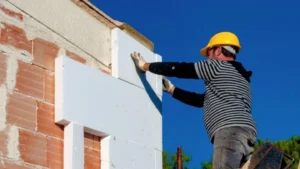
- Solid wall insulation can reduce heat loss through walls by up to 40%
- Loft insulation at proper depth (270mm+) pays for itself repeatedly
- Floor insulation eliminates that particular misery of cold feet on winter mornings
- Double or triple glazing doesn’t just reduce heat loss—it eliminates drafts, reduces noise, and transforms how rooms feel
These aren’t “nice to have” features. They’re performance upgrades that change how your home lives.
The Systems
Your heating system is likely the single largest energy consumer in your home. If it’s over ten years old, it’s almost certainly operating at efficiency levels that modern regulations wouldn’t permit for new installations.
But here’s what most homeowners miss: even an efficient boiler in a leaky house is money wasted. The sequence matters. Insulate first, then right-size your heating system. Otherwise you’re buying capacity you don’t need to compensate for losses you shouldn’t have.
Smart controls complete the picture. Not gimmicks—genuine optimisation that ensures heat arrives when and where needed, not when the timer guesses you might want it.
The Details
LED lighting. Efficient appliances. Draught-proofing. These aren’t afterthoughts. In aggregate, they matter. A modern LED uses 90% less energy than the incandescent it replaces. Multiply that across every light in your home, every day, every year.
Small decisions compound.
The Economics That Estate Agents Won’t Explain
Let’s talk numbers without the greenwash.
Energy bill reduction: Comprehensive retrofitting typically delivers 30-60% savings on heating costs. In a period of volatile energy prices, that’s not just money saved—it’s predictability gained. Your budget becomes more stable regardless of what global markets do.
Capital appreciation: Energy Performance Certificate (EPC) ratings increasingly drive property values. Homes rated C or above command premiums. Homes rated D or below face growing buyer resistance and mortgage lender scrutiny. Retrofitting isn’t expense—it’s equity protection.
Maintenance cost avoidance: Damp, condensation, and mould—the chronic conditions of poorly performing homes—are expensive to remediate. Proper insulation and ventilation prevent these issues at source. You save the remediation costs and the health impacts.
Asset longevity: Heating systems in well-insulated homes work less hard and last longer. Building fabric protected from moisture and temperature stress deteriorates slower. Your home lasts longer, costs less, performs better.
The payback periods vary by measure—some insulation pays for itself in 2-3 years, comprehensive whole-house approaches in 7-10. But here’s the critical point: these are 20-30 year assets. The return continues long after payback. You’re not just buying efficiency. You’re buying a decades-long income stream of avoided costs.
The Carbon Conversation (Without the Guilt)
Yes, retrofitting reduces your carbon footprint. Significantly. UK homes account for roughly 20% of national emissions—mostly from heating. Addressing this is essential to climate targets.
But let’s be honest: most homeowners don’t wake up prioritising carbon reduction. They prioritise warmth, cost, and comfort. The environmental benefit is a byproduct they feel good about, not the primary driver.
That’s fine. Effective climate action doesn’t require environmental piety. It requires rational self-interest aligned with systemic change. Retrofitting delivers both.
Every home that upgrades reduces strain on national energy infrastructure. Reduces peak demand that requires fossil backup. Reduces the political and economic vulnerability of import dependence. Your personal decision has collective impact—whether you make it for idealistic or pragmatic reasons.
Why Most Homeowners Hesitate (And Why They’re Wrong)
If the case is so compelling, why isn’t every street being retrofitted?
Three barriers, all surmountable:
Complexity
Most homeowners don’t know where to start. Which measures first? Which contractors trustworthy? What grants available? The information landscape is fragmented and often contradictory.
Capital
Retrofitting requires upfront investment. Savings materialise over years. For households without spare capital, this timing mismatch blocks action—even when the economics are favourable.
Disruption
Fear of building work, dust, and domestic upheaval deters many. The imagined hassle exceeds the actual hassle, but the perception is real.
These barriers explain hesitation. They don’t justify it.
Complexity is addressable through professional assessment and project management. Capital constraints are increasingly solvable through green finance, grants, and the growing recognition that retrofitting adds asset value. Disruption is minimised through proper planning and phased approaches.
The real risk isn’t retrofitting. It’s continuing to pay premium prices for inferior performance.
The ECMC Approach: Retrofitting as Home Improvement
At ECMC, we treat retrofitting as what it is: the most consequential home improvement you can make.
Not because we’re environmental evangelists. Because the numbers work. Because the comfort transformation is immediate and obvious. Because homeowners deserve better than paying through the nose for draughty mediocrity.
Our process reflects this:
Assessment
We diagnose before we prescribe. Thermal imaging, air tightness testing, occupancy analysis. We identify where your home actually loses energy, not where guesswork suggests.
Design
Integrated solutions, not product sales. The measures that work together for your specific property, your usage patterns, your priorities. No unnecessary work. No missed opportunities.
Delivery
Professional installation with minimal disruption. Coordinated trades, clear timelines, proper protection of your living space. Building work is invasive—we minimise that reality.
Verification
Proof of performance, not promises. Post-installation testing confirms results. You see the difference in comfort immediately; you see it in bills shortly after.
The Question Beneath the Question
When homeowners ask about retrofitting, they’re often really asking: “Is my home good enough?”
The uncomfortable truth: if it was built before the 1990s and hasn’t been upgraded, almost certainly not. Not by modern standards. Not by the standards your energy bills deserve. Not by the standards future buyers will expect.
But “not good enough” isn’t condemnation. It’s opportunity. Every inefficiency is a saving waiting to be captured. Every draughty corner is comfort waiting to be unlocked. Every outdated system is a chance to improve.
Your home can be warmer. Cheaper to run. More valuable. More comfortable. Less environmentally damaging.
These aren’t competing priorities. They’re the same priority viewed from different angles.
The only question is whether you’ll capture these benefits—or continue funding their absence.
The Retrofit Decision
There’s a particular moment in homeownership when the calculation shifts. When you realise you’re not “saving money” by delaying upgrades. You’re borrowing from your future self—at predatory interest rates paid to energy suppliers.
That moment might arrive with a shocking winter bill. With a survey revealing your EPC rating. With a cold snap that makes certain rooms unusable. With news of another energy price rise.
Whenever it arrives, the logic is the same: the cost of inaction exceeds the cost of action.
Retrofitting isn’t an expense on top of your housing costs. It’s a reduction of your housing costs, front-loaded. An investment that pays dividends in money saved, comfort gained, and value protected.
Your home is your most significant asset. It shelters your family. It anchors your finances. It shapes your daily experience.
Why accept performance that’s decades out of date?