The Retrofit Roadmap: Four Strategic Pathways to Building Energy Excellence
With buildings accounting for nearly 40% of global carbon emissions and 50% of extracted resources, the construction sector faces a singular imperative: we cannot build our way to sustainability with new construction alone. Existing building stock—representing 97% of built environment square footage—constitutes both our greatest liability and our most significant opportunity.
The trajectory is clear: to meet net-zero commitments by 2050, the global retrofit rate must triple from current levels to 2.5% of existing buildings annually. This isn’t merely an environmental necessity; it’s an economic inevitability. Energy costs continue to escalate, carbon pricing mechanisms are expanding, and tenants increasingly prioritize high-performance spaces that offer thermal comfort, air quality, and operational resilience.
ECMC approaches building retrofitting not as a collection of discrete upgrades, but as systematic building performance optimization. Whether managing a single asset or a diverse portfolio, four strategic pathways define the journey from energy liability to high-performance asset.
Foundation: The Diagnostic Energy Audit
Before implementing solutions, understanding the building’s unique thermal and operational fingerprint is non-negotiable. Professional energy auditing replaces guesswork with data-driven strategy, identifying not just where energy is wasted, but the hierarchy of interventions that maximize return on investment.
The Technical Assessment Protocol
Unlike superficial walkthroughs, comprehensive energy auditing employs blower door testing and infrared thermography to quantify invisible energy flows. Blower doors depressurize structures to measure air leakage rates (ACH50—air changes per hour at 50 Pascals), revealing infiltration pathways invisible to visual inspection. Thermal imaging identifies thermal bridges—localized cold spots where insulation is compressed, missing, or bypassed by structural elements—pinpointing exact locations of heat loss.
The audit delivers a retrofit roadmap prioritizing interventions by cost-effectiveness: quick wins (low-cost/high-impact air sealing), medium-term investments (equipment upgrades), and deep retrofit strategies (envelope reconstruction). This phased approach allows owners to align capital expenditure with energy savings cash flows, optimizing financial performance alongside environmental impact.
Pathway 1: Airtightness Architecture—Eliminating Uncontrolled Infiltration
The most cost-effective energy retrofit isn’t adding renewable generation; it’s stopping conditioned air from escaping. In typical existing buildings, uncontrolled air leakage accounts for 30-50% of heating and cooling loads—energy spent conditioning air that immediately exits the structure through cracks, penetrations, and construction gaps.
The Building Envelope as a System
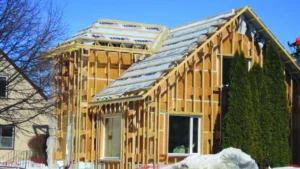
Effective air sealing treats the building envelope as a continuous, three-dimensional membrane. Critical intervention points include:
- Attic Air Barriers: Sealing top plates, recessed lighting, and duct chases that create thermal bypasses
- Basement Rim Joists: Addressing the often-neglected junction between foundation and framing
- Window and Door Perimeters: Beyond weatherstripping, addressing rough opening gaps with expanding foam and air-tight membranes
- Service Penetrations: Electrical boxes, plumbing stacks, and HVAC ducts that puncture the pressure boundary
When combined with balanced mechanical ventilation (Heat Recovery Ventilation or Energy Recovery Ventilation), aggressive air sealing improves indoor air quality while reducing energy demand. The building breathes through designed pathways with filtered, conditioned fresh air rather than leaking through construction gaps carrying pollutants, moisture, and allergens.
Performance Target: ECMC retrofits typically achieve airtightness below 3.0 ACH50, with deep retrofits approaching Passive House standards of 0.6 ACH50—reducing heating and cooling loads by 40-60% before equipment upgrades.
Pathway 2: Systems Intelligence—High-Efficiency Infrastructure
While the building envelope reduces demand, mechanical and electrical systems determine how efficiently remaining loads are met. This pathway addresses the operational heart of the building through strategic equipment modernization.
HVAC Transformation
Traditional heating and cooling systems often operate at seasonal efficiency ratings (COP) of 2.0-3.0. Air-source heat pumps (ASHPs) and ground-source heat pumps (GSHPs) deliver equivalent comfort at COPs of 4.0-5.0, reducing energy consumption by 50-70% for thermal conditioning. When paired with the reduced loads from Pathway 1 (airtightness), heat pumps can be downsized, reducing both capital costs and operational energy.
Domestic Hot Water Optimization
Heat pump water heaters extract thermal energy from ambient air to heat water at 3-4x the efficiency of resistance tanks. For multi-family and commercial applications, heat recovery from wastewater and centralized solar thermal systems further reduce the 15-20% of building energy typically consumed by water heating.
Lighting & Plug Load Strategy
LED retrofits combined with daylight harvesting and occupancy-based controls reduce lighting energy by 60-90%. Advanced power strips and circuit-level monitoring eliminate phantom loads—devices consuming electricity while ostensibly “off”—which can account for 10% of residential and 5% of commercial consumption.
Integration Principle: ECMC implements smart building controls that coordinate these systems, using predictive algorithms and occupancy sensors to ensure equipment operates only when necessary, at optimal efficiency setpoints.
Pathway 3: Deep Envelope Retrofit—Thermal Excellence
For buildings where superficial measures prove insufficient, deep energy retrofitting reengineers the thermal envelope itself. This pathway addresses the fundamental physics of heat transfer through conduction (materials) and radiation (solar gain), delivering 58-79% total energy reductions depending on climate and baseline condition.
High-Performance Glazing
Windows represent both the eyes of a building and its thermal Achilles heel. Retrofitting with triple-pane glazing (U-values below 0.8 W/m²K) and thermally broken frames eliminates the radiant cold surfaces that drive discomfort and condensation. Advanced glazing with electrochromic or thermochromic properties automatically modulates solar heat gain, optimizing for winter heat collection and summer rejection without manual shading.
Exterior Insulation Strategy
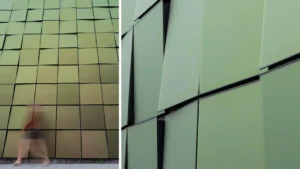
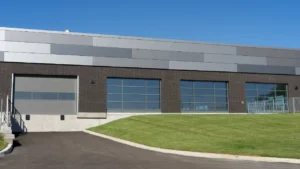
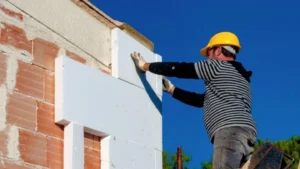
Adding insulation to exterior walls—External Thermal Insulation Composite Systems (ETICS) or rigid mineral wool/fiberglass panels—wraps the structural envelope in a continuous thermal blanket. This approach eliminates thermal bridging through studs and joists while protecting the existing structure from thermal stress and moisture accumulation. Retrofits achieving R-30 to R-40 effective wall values (from typical R-13 baselines) become standard rather than exceptional.
Roof and Foundation Integration
Green roofs provide biological insulation while managing stormwater and urban heat island effects. For foundations, perimeter insulation and sub-slab vapor barriers address the 15-20% of heat loss occurring through grade-contact surfaces, critical for basement-level energy performance.
Pathway 4: Certification Frameworks—Verified Performance Standards
Retrofitting gains credibility and market value when performance is verified against established green building standards. These frameworks provide quality assurance while unlocking financing mechanisms and tenant premiums.
Passive House EnerPHit
The EnerPHit standard adapts Passive House principles for existing buildings, requiring stringent airtightness (≤1.0 ACH50), superinsulation, and heat recovery ventilation. While demanding, this standard guarantees 90% heating/cooling energy reduction and superior thermal comfort.
LEED O+M (Operations + Maintenance)
For commercial portfolios, LEED O+M certification provides a roadmap for continuous improvement across energy, water, waste, and indoor environmental quality. The rating system (Certified to Platinum) offers third-party verification that retrofit investments deliver measurable sustainability outcomes.
Net Zero Energy & Carbon
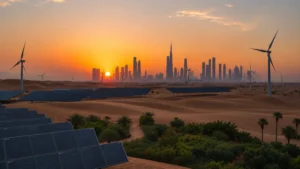
The ultimate retrofit objective: Net Zero Energy Buildings (NZEB) produce as much renewable energy as they consume annually. ECMC designs retrofit pathways that first minimize loads (Pathways 1-3), then right-size rooftop solar PV, solar thermal, or geothermal systems to meet the dramatically reduced remaining demand. For full Net Zero Carbon, embodied carbon of retrofit materials is balanced against operational savings, creating buildings that are climate-neutral across their lifecycle.
Implementation Strategy: The ECMC Phased Approach
Effective retrofitting balances immediate returns with long-term transformation:
- Phase 1: Rapid Payback (0-3 years) Energy auditing, air sealing, LED lighting, and smart controls deliver 15-25% energy reductions with payback periods under 5 years.
- Phase 2: Systems Modernization (3-7 years) HVAC replacement with heat pumps, window upgrades, and major appliance replacement as equipment reaches end-of-life, achieving 40-50% reductions.
- Phase 3: Deep Retrofit (7-15 years) Exterior insulation, renewable energy integration, and envelope reconstruction for 70-90% reductions, often aligned with major renovation cycles to minimize disruption.
Financing Mechanisms ECMC facilitates Energy Service Company (ESCO) arrangements, Property Assessed Clean Energy (PACE) financing, and green bonds where applicable, enabling retrofit implementation using projected energy savings as the primary capital source.
Conclusion: Retrofitting as Asset Enhancement
Energy efficiency retrofitting transcends cost reduction—it represents asset transformation. Buildings that undergo comprehensive retrofitting command 3-7% rental premiums, experience lower vacancy rates, and avoid the stranded asset risk facing unimproved stock as energy codes tighten and carbon pricing expands.
The four pathways—diagnostic auditing, airtightness optimization, systems intelligence, and deep envelope retrofitting—provide a comprehensive framework for converting existing liabilities into high-performance, sustainable assets. In an era of climate urgency and resource constraints, retrofitting isn’t merely an option; it’s the primary mechanism for building sector decarbonization.
ECMC partners with building owners to navigate these pathways, delivering technical expertise and implementation capacity that transforms retrofit potential into verified performance.
Ready to assess your building’s retrofit potential? Contact ECMC to initiate comprehensive energy diagnostics and develop your customized pathway to net-zero performance.