Hidden cost of building energy waste in UAE commercial properties!
The most expensive building problems are not always the ones that trigger an alarm.
A chiller may continue running after occupancy hours. A faulty sensor may force an air-conditioning system to cool more than required. Pumps may operate at full speed while demand is low. Lighting may remain on across empty floors.
Nothing appears broken. Yet money is being lost every hour.
Building energy waste is rarely one dramatic failure. It is usually the combined result of outdated settings, inefficient equipment, weak controls, poor maintenance, and operating practices that no longer match how the building is actually used.
The utility bill is only the most visible cost. The deeper impact appears in premature equipment failure, maintenance pressure, occupant complaints, weaker asset performance, avoidable carbon emissions, and larger capital requirements later.
Key Takeaways
- Building energy waste affects operating costs, maintenance budgets, equipment life, occupant comfort, and asset performance.
- HVAC controls, operating schedules, sensor errors, pumps, lighting, and building-envelope weaknesses are common sources of hidden waste.
- Replacing equipment before diagnosing the building can result in unnecessary or incorrectly sized capital investment.
- A structured energy audit should establish where energy is used, why performance has declined, and which improvements are financially justified.
- Energy savings should be measured against an agreed baseline rather than assumed from equipment specifications.
What Is Building Energy Waste?
Building energy waste is energy consumed without delivering a useful operational outcome.
It may result from equipment running when it is not needed, systems operating outside efficient ranges, poor coordination between mechanical and electrical assets, or energy escaping through the building envelope. The waste may remain hidden because the building continues functioning despite the inefficiency.
The United Nations Environment Programme reports that buildings and construction account for approximately 32% of global energy consumption and 34% of carbon dioxide emissions. These figures make building performance a significant cost and environmental issue rather than a minor facilities-management concern.
International benchmarking also suggests that the scale of avoidable waste can be substantial. The US Environmental Protection Agency’s ENERGY STAR programme states that commercial buildings often waste up to 30% of the energy they consume through inefficiencies. This figure should not be treated as a guaranteed saving for every UAE property, but it illustrates how far actual performance can drift from efficient operation.
The Hidden-Cost Chain
Visible issue | What may be happening technically | Hidden business cost |
Higher electricity bills | Equipment schedules, setpoints, or controls no longer match demand | Recurring operating expenditure |
Frequent HVAC complaints | Poor zoning, sensor drift, air imbalance, or control conflict | Reduced comfort and additional maintenance calls |
Repeated equipment failures | Assets operate for longer hours or under excessive load | Shorter equipment life and unplanned capital spending |
Uneven temperatures | Airflow, chilled-water balance, or envelope weaknesses | Energy waste and occupant dissatisfaction |
High consumption after hours | HVAC, lighting, pumps, or plug loads remain active | Base-load cost that continues regardless of occupancy |
Retrofit projects underperform | Savings were estimated but not properly measured | Weak investment confidence and disputed results |
Solar system delivers a low share of demand | The building load was not reduced before system sizing | Higher renewable-energy investment than necessary |
Carbon targets are missed | Energy baselines and improvement plans are incomplete | Reporting, compliance, and reputational exposure |
Where Building Energy Waste Usually Hides
HVAC Systems
In UAE buildings, cooling systems are usually among the first areas requiring detailed assessment. Potential issues include:
- Chillers operating inefficiently at partial load;
- Poor sequencing between multiple chillers;
- Low chilled-water temperature differential;
- Pumps running at unnecessary speed;
- Cooling towers operating with poor setpoints;
- Dirty coils or filters;
- Excessive static-pressure settings;
- Air-handling units operating outside occupancy hours;
- Inaccurate temperature, pressure, humidity, or carbon-dioxide sensors;
- Uncontrolled fresh-air intake; and
- Thermostat settings that encourage overcooling.
The largest equipment is not always responsible for the largest avoidable loss. A small sensor error can influence the operation of a much larger system.
Building Management Systems
A Building Management System, or BMS, does not automatically make a building efficient. The BMS may be functioning technically while operating with:
- Old schedules;
- Incorrect setpoints;
- Disabled alarms;
- Manual overrides;
- Control loops left in hand mode;
- Sensors that have not been calibrated;
- Incomplete trend data;
- Poor equipment sequencing; or
- Control logic that no longer reflects the building’s use.
A technically sound review should examine how the system is programmed and operated—not merely whether the interface is online.
Lighting and Controls
LED lighting can reduce electricity use, but savings may remain limited when controls are absent or poorly configured. Waste commonly occurs where:
- Lights remain on after occupancy;
- Daylight is available but not used;
- Motion sensors have unsuitable delay periods;
- Parking and external lighting operate at full output throughout the night;
- Common areas follow fixed schedules despite changing use; or
- Tenant and landlord lighting loads are not separately understood.
The correct solution may involve fixtures, controls, zoning, schedules, or a combination of these measures.
Building Envelope
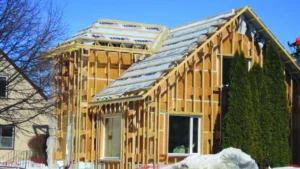
Heat entering through roofs, façades, glazing, doors, and uncontrolled air leakage increases cooling demand. Possible weaknesses include:
- Damaged or incomplete insulation;
- Poorly sealed doors;
- Air leakage around windows;
- Degraded roof systems;
- Unshaded glazing;
- Thermal bridges; and
- Frequent opening of conditioned entrances.
Envelope improvements require careful technical and financial assessment. A large façade intervention may not always be the first priority, but targeted corrections can reduce cooling load and improve comfort.
Pumps, Fans, and Motors
Motors often operate in the background and receive attention only when they fail. Energy waste may result from:
- Oversized equipment;
- Throttling instead of speed control;
- Poor system balancing;
- Worn components;
- Misaligned drives;
- Incorrect pressure settings;
- Continuous operation; or
- Variable-frequency drives that are disabled or poorly programmed.
The correct assessment should consider the complete system curve and operating requirement rather than evaluating motor efficiency alone.
Domestic Water and Hot-Water Systems
Energy and water performance are often connected. Waste may occur through:
- Water leaks;
- Excessive pumping pressure;
- Poor pump schedules;
- Uninsulated hot-water pipes;
- Inefficient heaters;
- Unnecessary recirculation; or
- Control settings that maintain temperatures beyond operational requirements.
Dubai’s Demand Side Management Strategy aims to reduce electricity and water demand by 30% by 2030, while the emirate has also maintained a target to retrofit more than 30,000 existing buildings. This policy direction confirms that the performance of existing buildings is central to the region’s efficiency objectives.
How to Identify the True Cost of Building Energy Waste
Step 1: Establish a Reliable Baseline
Review at least 12 months of electricity, water, and fuel data where available. Longer datasets may provide a better view of seasonal and operational trends.
The baseline should account for relevant variables such as:
- Weather;
- Occupancy;
- Operating hours;
- Floor area;
- Production or service activity;
- Tenant changes; and
- Major equipment modifications.
Without adjustment, a reduction in energy use caused by lower occupancy may be incorrectly reported as an efficiency saving.
Step 2: Benchmark Performance
Compare the building’s performance against:
- Its own historical consumption;
- Similar buildings where reliable data is available;
- Designed or expected operating conditions;
- Energy-use intensity indicators; and
- System-level performance metrics.
Benchmarking identifies where investigation should begin. It does not, by itself, diagnose the cause.
Step 3: Complete the Appropriate Energy Audit
ASHRAE’s recognised audit framework progresses from a preliminary assessment to increasingly detailed technical and investment analysis. A more detailed audit may include equipment testing, interval data, submetering, engineering calculations, lifecycle-cost analysis, and a clearer definition of proposed energy conservation measures.
The audit should produce more than a list of equipment. It should explain:
- Where energy is being used;
- Why actual performance differs from expected performance;
- Which measures are technically suitable;
- What dependencies exist between measures;
- What investment is required;
- What operational risks must be considered; and
- How savings will be verified.
Step 4: Prioritise Measures by Technical Logic
Energy conservation measures should be arranged in a logical order.
Priority | Typical measures |
Operational corrections | Schedules, setpoints, overrides and shutdown procedures |
Maintenance improvements | Filters, coils, calibration, leakage and equipment condition |
Control optimisation | BMS logic, sequencing, zoning and demand-based control |
System improvements | Balancing, variable-speed control, heat-transfer performance |
Equipment upgrades | Lighting, motors, pumps, HVAC assets and controls |
Building-envelope measures | Insulation, sealing, glazing or shading |
Renewable energy | Solar or other generation sized against the optimised load |
This sequence is not rigid. Building conditions may require urgent capital replacement. However, operational and control issues should be examined before new equipment is sized.
Step 5: Measure and Verify Savings
Estimated savings are not the same as achieved savings.
Actual consumption after implementation may be affected by weather, occupancy, operating hours, tenant activity, or changes in building use. Measurement and verification should account for these factors.
The International Performance Measurement and Verification Protocol provides a recognised framework for confirming that an efficiency project has the potential to save energy and for quantifying site-level energy and cost impacts.
A credible measurement and verification plan should define:
- The baseline period;
- The reporting period;
- The measurement boundary;
- The variables requiring adjustment;
- The meters or data points used;
- The calculation method; and
- Responsibility for reviewing results.
This protects both the building owner and the service provider.
Conclusion: Ignoring Waste Does Not Avoid Cost
Building energy waste rarely remains limited to the electricity bill. It increases equipment operating hours, places pressure on maintenance teams, weakens occupant comfort, distorts capital decisions, raises emissions, and makes future retrofit programmes more expensive.
The first step is not to assume that every old asset must be replaced. It is to establish how the building is actually performing.
A reliable energy audit can distinguish between operational waste, maintenance issues, control failures, system limitations, and equipment that genuinely requires replacement. A phased energy efficiency retrofit can then target the measures that offer the strongest technical and financial value.
ECMC supports organisations in assessing existing building performance, identifying energy conservation measures, developing technically justified retrofit programmes, and establishing clear approaches for measuring results.
The objective is not simply to install more efficient equipment. It is to make the entire building operate more intelligently, reliably, and economically.